GMADA News & Updates
Greater Mohali Is Entering a New Phase — Here’s Why You Should Pay Attention
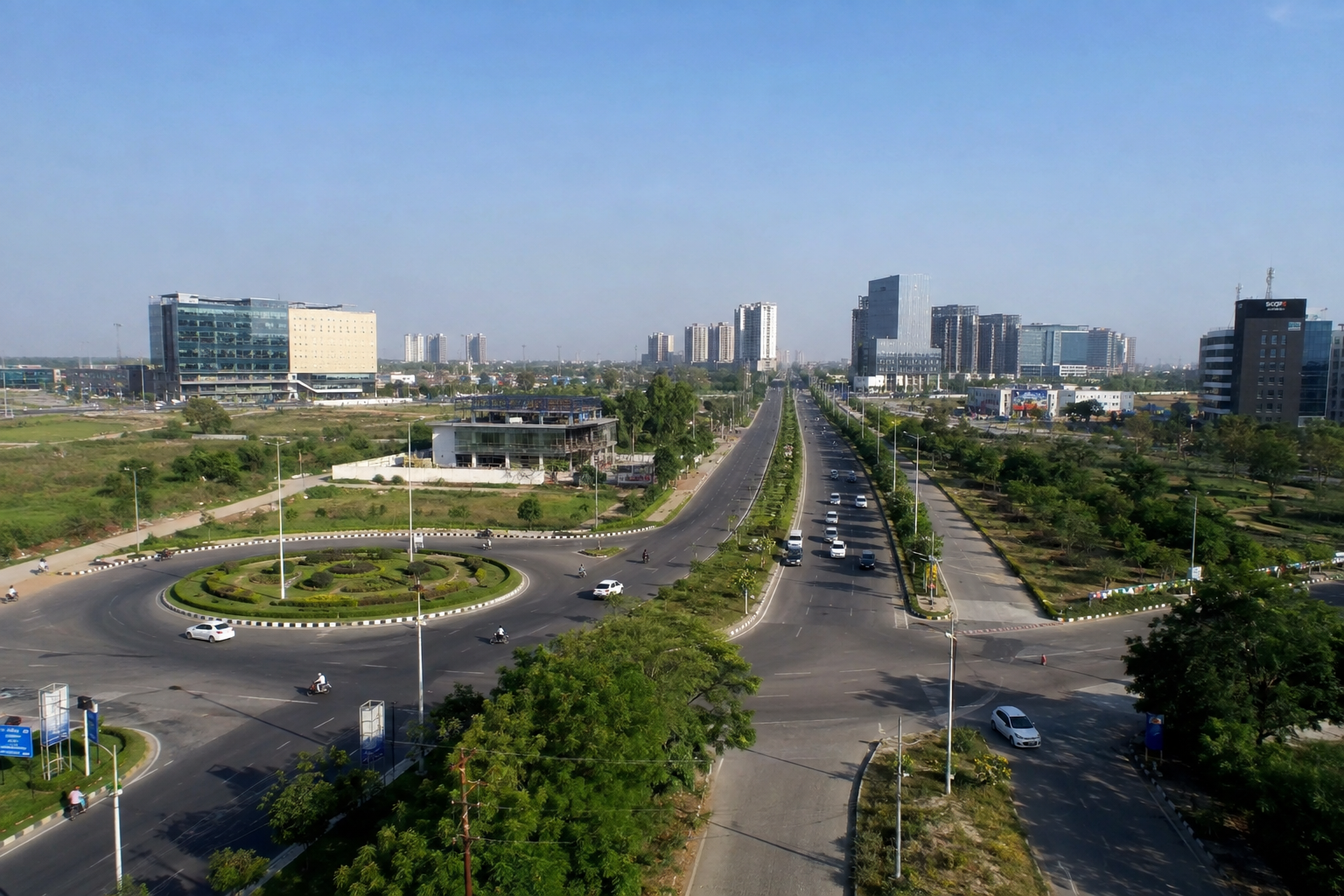
Greater Mohali is not expanding through one single project. Its growth is happening through a combination of new residential areas, land acquisition, roads, public utilities, commercial development and smaller maintenance works that keep already-developed sectors functioning.
Recent activity by the Greater Mohali Area Development Authority (GMADA) reflects both sides of this process. Major projects such as Aerotropolis Extension and Eco City-3 are opening new areas for planned development, while works involving roads, lighting, drainage, public-health infrastructure and traffic safety are aimed at improving existing urban areas.
Together, these projects provide a clearer picture of how Greater Mohali is gradually expanding—and why development on the ground often takes place in several stages rather than all at once.
New Chandigarh: Development Moving Beyond Individual Sectors
New Chandigarh remains one of the most important areas in GMADA’s long-term development plans. The New Chandigarh Master Plan 2008–2031 provides the larger framework for residential areas, commercial zones, institutional uses, green spaces and major roads. The plan also identifies a network of wide sector roads and urban infrastructure needed to support development as the area grows.
Recent activity shows that attention is increasingly moving towards filling gaps within this larger planned structure. One example is the proposed Commercial City Centre in New Chandigarh. GMADA has initiated acquisition proceedings for approximately 227.89 acres across the villages of Sangala, Bansepur, Tira and Chahar Majra.
The project includes not only commercial development but also access roads and internal circulation infrastructure. The Social Impact Assessment notification specifically links the proposed acquisition to the approved New Chandigarh Master Plan.
For the villages involved, such projects can mean a major change in land use. Areas that were traditionally agricultural or village-oriented can gradually become part of a larger urban network of roads, residential sectors, commercial centres and public facilities.
That transition, however, does not happen simply because a project has been announced. Land acquisition, Social Impact Assessment, statutory approvals, compensation or land-pooling decisions and physical development are separate stages.
Connecting Growth: The Roads Shaping Greater Mohali’s Future
Large urban projects only work when people can move between them efficiently. This is why road construction and upgrading continue to form a substantial part of GMADA’s development activity.
GMADA’s official infrastructure plan for New Chandigarh includes a 200-foot-wide road connecting the New Chandigarh/UT boundary with the Kurali-Siswan road, designed as a major link between Chandigarh, Punjab and Himachal Pradesh. The broader plan also provides for additional major roads connecting different parts of New Chandigarh.
Elsewhere in Greater Mohali, GMADA’s current project list includes the development of Aerocity and the PR-9 road from the Aerocity/Airport Road junction towards the Kharar-Banur road.
Road development is also taking place at the sector level. Recent tenders have included construction of internal roads and a commercial pocket in Sector 101, while earlier works in IT City have covered road markings and house-indicator boards. GMADA has also invited work relating to road resurfacing and junction improvements under its wider Mohali road-upgradation programme.
These may appear to be separate contracts, but collectively they contribute to a larger objective: making new sectors usable and improving connectivity between established and developing parts of Mohali.
Street Lighting, Drainage and Safety Matter Just as Much
Urban development is often judged by major roads and large projects, but residents experience a city through much smaller pieces of infrastructure every day. Street lighting is one example. Recent infrastructure activity has included high-mast lighting at locations in IT City, while street-light maintenance remains an ongoing requirement across developed urban areas.
Good lighting improves visibility at junctions, makes roads easier to use after dark and supports the functioning of residential and commercial areas. It becomes particularly important as previously low-traffic areas develop into active urban corridors.
Traffic-calming measures matter for the same reason. Speed bumps at identified blind spots and other road-safety interventions may be relatively small works compared with a new highway, but they can directly affect everyday safety for residents.
Drainage is another less visible but essential part of urban development. GMADA’s plans for New Chandigarh include an independent storm-water drainage network using RCC pipes, road gullies, natural drainage channels, water bodies and rainwater-harvesting systems.
Across Mohali, maintenance of road gullies, sewer lines, storm-water systems and other Public Health Services forms part of routine infrastructure work. In this context, “public health” generally refers to civil infrastructure such as water supply, sewerage, drainage and related services, rather than hospitals or healthcare.
This distinction matters because roads cannot function properly in isolation. A newly surfaced road can deteriorate quickly if storm water has nowhere to drain.
Eco City-3: Completing the New Chandigarh Residential Plan
Eco City-3 is particularly important because it demonstrates how planning, land acquisition and implementation can overlap. GMADA had earlier acquired approximately 713.375 acres across villages including Rasulpur, Takipur, Rajgarh, Majra, Kartarpur, Kansala and Hoshiarpur for Eco City-3. The acquisition award was announced on 24 December 2025.
A later review found that certain Khasra numbers forming part of the planned scheme had remained outside the acquisition due to differences in understanding the scheme boundary and Master Plan roads.
GMADA subsequently identified approximately 21 additional acres as necessary for more comprehensive and integrated planning of Eco City-3. This may sound like a minor technical correction, but it illustrates an important part of planned urban development.
If small pieces of land remain outside a scheme, they can interrupt road alignments, public utilities, plot layouts or connectivity between different parts of the development. The effort to acquire missing Khasra numbers is therefore not simply about increasing the project's size. It is about creating a more continuous urban layout.
Eco City-3 has also involved land-pooling options for affected landowners, adding another layer to how land is being assembled and returned or compensated under the applicable policy.
Aerotropolis Extension: A Major Area to Watch
The Aerotropolis Extension Residential Project is another significant part of Greater Mohali's future growth. Recent Social Impact Assessment and Expert Group proceedings have involved several villages under the Banur Master Plan, including areas such as Sekhan Majra, Tangori, Kurara, Khizargarh, Manakpur Kallar, Banur and Karala.
These proceedings are important because they indicate the direction in which planned urban development is proposed to expand. At the same time, it is important not to describe all of this land as already developed or even finally acquired.
Social Impact Assessment, Expert Group recommendations under Section 7, consideration by the competent authority under Section 8, subsequent acquisition notifications, hearings, awards and possession are different stages of the statutory process.
For residents and landowners, knowing the stage of a project is often more useful than simply knowing that the project exists. Strategically, the Aerotropolis area has significance because it forms part of the wider development zone around Airport Road, Aerocity, IT City and the Banur side of Greater Mohali. As residential, commercial and employment areas develop around these corridors, the importance of connecting roads and utilities is likely to increase as well.
What These Projects Mean for Residents
For existing residents, development can bring both opportunities and inconvenience. New roads can shorten travel times and improve access to workplaces, schools and commercial areas. Better lighting, drainage and road maintenance can improve everyday usability of neighbourhoods.
At the same time, construction can temporarily mean diversions, dust, changing traffic patterns or interruptions around work sites. In villages entering new planning areas, the impact can be much larger because land use itself may change. Landowners may need to understand acquisition notices, Khasra numbers, Social Impact Assessment proceedings, compensation provisions and land-pooling options before making decisions.
What They Mean for Businesses
Businesses tend to benefit when accessibility and population density improve. A new road, residential sector or commercial centre can gradually create demand for retail, offices, services, schools, restaurants and other local businesses.
Projects such as the Commercial City Centre, Aerotropolis Extension and the continued development of IT City and Aerocity can therefore influence where future commercial activity emerges. But businesses should also distinguish between a planned project and a completed market.
A land-acquisition notification or tender is an indicator of activity—not proof that shops, offices, roads or customers will appear immediately.
Will These Projects Increase Property Values?
Infrastructure often influences the attractiveness of an area, but property values should not be treated as a guaranteed outcome of a GMADA announcement. Road connectivity, drainage, street lighting, nearby commercial development and public infrastructure can make an area more usable and may influence buyer demand.
However, actual property prices depend on several other factors, including:
- the exact location of the property;
- completion of infrastructure;
- legal and planning approvals;
- accessibility;
- supply of competing properties;
- market demand; and
- the time required for surrounding development to mature.
A proposed road or future sector should therefore not be treated in the same way as completed infrastructure when evaluating property.
The Bigger Shift: From Separate Projects to an Urban Network
What is happening across Greater Mohali is best understood not as a collection of isolated tenders, but as the gradual creation of a larger urban network. New Chandigarh is expanding through residential, commercial and infrastructure projects.
Aerocity and IT City continue to require roads, lighting, commercial areas and maintenance. Aerotropolis Extension is pushing planned development towards new villages under the Banur Master Plan. Eco City-3 is filling gaps within the New Chandigarh residential framework.
Existing sectors meanwhile require road repairs, drainage, street lighting, bridges, horticulture and other maintenance to remain functional. When these pieces connect successfully, the benefit is not simply more construction. The intended result is better connectivity, access to services, safer roads and a more organised pattern of urban growth.
Questions Residents and Stakeholders Should Keep Asking
When will these projects actually be completed?
There is no single timeline for all GMADA projects. A land-acquisition notice, an approved master plan, a tender and an awarded construction contract represent very different stages. Residents should therefore follow the individual project rather than assuming that publication of a notice means work is about to finish.
Does a tender mean construction has started?
Not necessarily. A tender usually means that the authority is inviting bids for a proposed work. Technical evaluation, financial evaluation, award of contract and commencement of work may still follow. Tender dates can also be extended, revised or cancelled.
Does Section 7 or Section 8 mean land acquisition is complete?
No. These are stages within the acquisition process. Further statutory procedures may remain before an award is announced and possession can be taken.
How can landowners know whether their land is affected?
They should check the village name, Hadbast number where applicable, Khasra numbers and the original government notification. A project affecting part of a village does not automatically mean every land parcel in that village is included.
Where should residents look for future tenders and changes?
GMADA publishes public notices and tender information through its official website, while Punjab's e-procurement system is commonly used for tender documents, corrigenda and bid schedules. Interested residents and businesses should also watch for corrigenda, deadline extensions and cancellation notices, rather than relying only on the first tender announcement.
Looking Ahead
Greater Mohali's transformation will not depend on one flagship project. Its future will be shaped by how successfully major developments such as Aerotropolis Extension, Eco City-3 and New Chandigarh's new urban areas are connected with the less visible infrastructure that makes a city work—roads, drainage, sewerage, lighting, traffic safety and maintenance.
For residents, landowners, businesses and property buyers, the most useful approach is to follow each project by its actual stage: planning, acquisition, approval, tendering, construction and completion. That gives a much clearer picture of Greater Mohali's development than project announcements alone.
As more villages, sectors and infrastructure corridors become connected, Greater Mohali is steadily moving from a collection of expanding urban pockets towards a larger and more integrated metropolitan area.
You May Also Want to Know
For official information on GMADA projects, master plans, land acquisition notices, tenders, corrigenda and other statutory updates, visit gmada.gov.in.
For easier-to-understand coverage of Greater Mohali development projects, Aerotropolis, Eco City, New Chandigarh, infrastructure works, land acquisition and important public notices, visit gmada.in.
Important Disclaimer
gmada.in is an independent information platform and is not affiliated with, authorised by, or operated by the Greater Mohali Area Development Authority (GMADA), Punjab Urban Planning and Development Authority (PUDA), Government of Punjab, or any other government department.