Policies & Regulations
How Land Acquisition Works for GMADA Projects in Greater Mohali
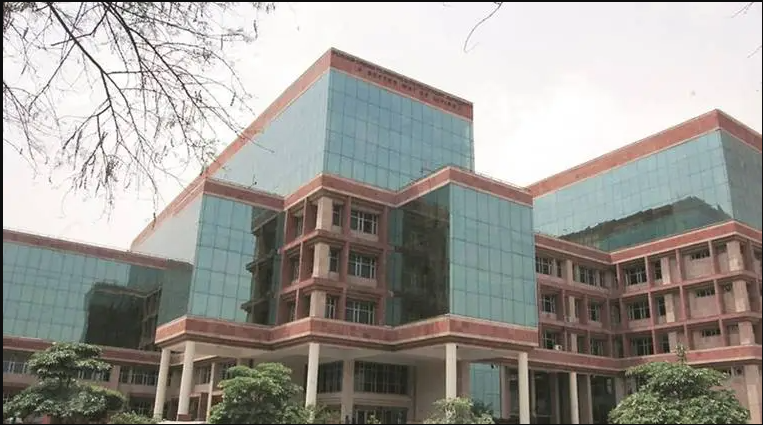
Understanding GMADA's Land Acquisition Process
The Greater Mohali Area Development Authority (GMADA) manages the land acquisition process within its jurisdiction. The process becomes much easier to understand once you know what each stage means.
For development projects connected with GMADA, land may be acquired through the process laid down under the law. These proceedings are handled by the concerned government authorities and the Land Acquisition Collector.
The main law involved is the Right to Fair Compensation and Transparency in Land Acquisition, Rehabilitation and Resettlement Act, 2013, commonly called the RFCTLARR Act, 2013.
A Preliminary Notification Is Issued
If the acquisition moves forward, a preliminary notification may be issued under Section 11 of the RFCTLARR Act. This is an important stage because the notification identifies the land proposed for acquisition.
If your village appears in a notification, that does not necessarily mean that all land in the village is being acquired. The most important thing is to check whether your Khasra number and land details are mentioned.
There Is an Opportunity to Raise Objections
After the preliminary notification, the law also provides an opportunity for affected persons to raise objections. This is dealt with under Section 15.
One thing worth remembering is that Section 15 and Section 21 are different stages. They should not be confused with each other.
Section 15 vs Section 21:
An easy way to understand the difference is that Section 15 is mainly about objections to the proposed acquisition. Section 21 comes later and is mainly about the people who have an interest in the land and the claims connected with it.
So, if you see a notice mentioning Section 21, it should not automatically be understood as the first stage for objecting to the acquisition.
What Does a Section 21 Notice Mean?
Section 21 is commonly mentioned in land acquisition notices, and it can be confusing if you are seeing the term for the first time.
Under the RFCTLARR Act, Section 21 is called a “Notice to persons interested.” In practical terms, it is a notice asking people who have an interest in the land to come forward and provide details of that interest and their claims.
Rehabilitation and Resettlement May Also Be Considered
Land acquisition is not only about deciding the price of land. The RFCTLARR Act also contains provisions relating to rehabilitation and resettlement for affected families where these provisions apply. Depending on the project, a Rehabilitation and Resettlement Scheme may be prepared as part of the acquisition process.
Once the required stages are completed, a formal declaration regarding the acquisition may also be issued.
What Should You Check in a GMADA Land Acquisition Notice?
If you find a public notice concerning your village or a nearby GMADA project, start with the basic details.
- Village Name: Check that the notice relates to the correct revenue village.
- Khasra Number: Match the Khasra number mentioned in the notice with your land records. This is one of the most important checks.
- Area of Land: A notice may relate to the whole Khasra number or only a particular area. Read the details carefully.
- Section Mentioned in the Notice: Check whether the notice refers to Section 11, Section 15, Section 21, an award or another stage of the process. Each has a different purpose.
- Important Dates: Look for the date of publication, last date for submitting anything, hearing or appearance date, and time of hearing.
- Place of Hearing: If you are required to appear, check the exact office or venue mentioned in the notice.
- Documents Required: The notice may ask you to bring or submit ownership records, identification documents or other supporting papers.
- Any Revised Notice: It is also worth checking whether a later corrigendum, revised notice or extension has been issued. Sometimes a notice is corrected or updated after its first publication.
Why Khasra Numbers Matter: The Eco City-3 Example
The Eco City-3 project in New Chandigarh is a useful example. GMADA records have referred to additional land connected with the project after certain Khasra numbers were not covered in an earlier acquisition.
For a landowner, the important point is simple: Being located “near Eco City-3” does not by itself tell you whether your land is part of a particular acquisition. You need to check the actual notification and match the village, Khasra number and area with your land records.
The same approach should be followed for other large projects, including Aerotropolis and different sector-development schemes.
What You Need to Know
Before taking any action, refer to the official GMADA notice for the complete and accurate details. Pay attention to key information such as the village, Khasra number, land area, applicable legal section, important dates, hearing venue, and required documents.
For official notices and documents, visit gmada.gov.in.
For easy-to-understand information, helpful context, and the latest updates, visit gmada.in.
Important Disclaimer
gmada.in is an independent information portal and is not affiliated with, endorsed by or operated by the Greater Mohali Area Development Authority (GMADA) or the Government of Punjab.