GMADA News & Updates
Mohali’s 100-Electric-Bus Plan: Why Is GMADA Expected to Pay 30% of the Cost?
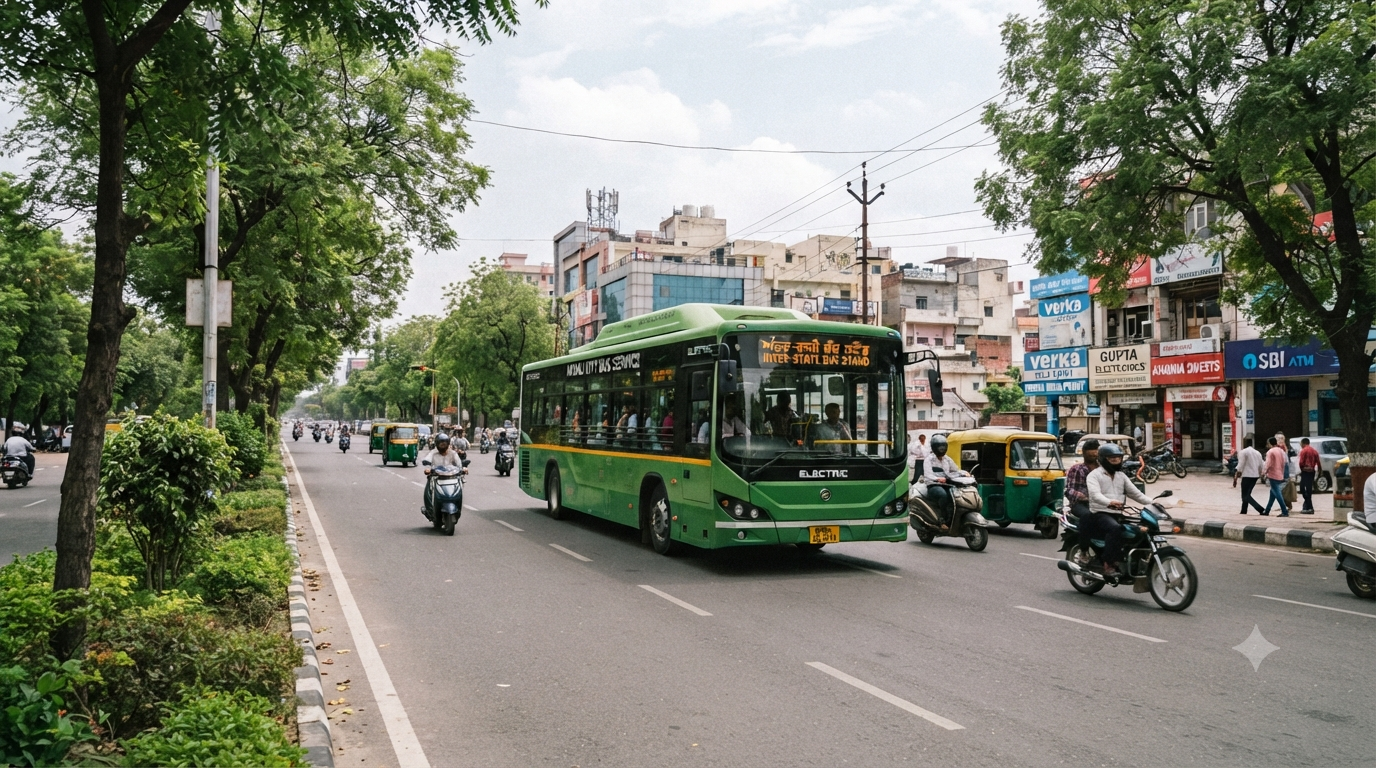
Mohali’s long-discussed city bus service is moving toward a much bigger regional model. The current proposal is for around 100 air-conditioned electric buses under the Centre’s PM-eBus Sewa Scheme, but the buses would not serve Mohali city alone.
The planned network is intended to connect the wider urban belt involving Mohali, Kharar, Zirakpur and Dera Bassi, with the participating government bodies creating a common organisation to manage the service. That is where GMADA comes in.
Under the proposed arrangement, the Greater Mohali Area Development Authority is expected to hold the largest share — 30% — in the Special Purpose Vehicle, or SPV, being created for the project. But this does not simply mean GMADA will “buy 30 buses” or directly pay 30% of every expense connected with the project. The proposed structure is more complicated.
What Is the 100-Electric-Bus Proposal?
The project is being developed under PM-eBus Sewa, a Government of India programme designed to introduce or expand organised electric-bus services in urban areas. For the Mohali region, the first phase is expected to involve around 100 electric buses. Earlier planning envisaged about eight routes, with route lengths ranging roughly between 17 km and 32 km and buses operating at intervals of around 15 minutes.
The important point is that the network is being planned as a regional city-bus system, not as a service restricted to the municipal limits of S.A.S. Nagar alone. That is why several local authorities are involved.
Which Authorities Will Be Part of the Bus Service?
According to the proposal reported by Hindustan Times, five government bodies are to participate in the Special Purpose Vehicle:
- Greater Mohali Area Development Authority (GMADA)
- Mohali Municipal Corporation
- Zirakpur Municipal Council
- Kharar Municipal Council
- Dera Bassi Municipal Council
The proposed shareholding pattern is:
- GMADA — 30%
- Zirakpur Municipal Council — 22%
- Kharar Municipal Council — 22%
- Mohali Municipal Corporation — 20%
- Dera Bassi Municipal Council — 6%
Together, these shares total 100%. Mohali Municipal Corporation approved its proposed 20% share at its November 2026 House meeting.
Why Is an SPV Needed?
An SPV, or Special Purpose Vehicle, is essentially a separate organisation created specifically to implement and manage a project. In this case, the bus network would cross several municipal jurisdictions.
A bus beginning its journey in Mohali might continue toward Kharar, Zirakpur or Dera Bassi. If each local body operated its own isolated service, issues such as routes, fares, depots, maintenance and revenue management could become fragmented. A common SPV allows the participating authorities to operate the network through one institutional framework. This approach also fits the Centre’s PM-eBus Sewa rules.
The scheme permits clusters of adjoining statutory towns to participate as a combined planning area, provided the state nominates or constitutes an SPV for implementing the electric-bus service. That makes the proposed Mohali cluster different from a conventional bus system operated by only one municipal corporation.
Why Does GMADA Have the Largest Share?
This is the most interesting part of the proposal. GMADA’s proposed share is 30%, higher than that of any individual municipal body. However, publicly reported details do not provide a specific mathematical formula explaining exactly why GMADA’s share was fixed at 30%. What is clear is that GMADA has a regional role that extends beyond one municipal boundary.
GMADA plans and develops major parts of the Greater Mohali region, including roads, urban estates and other large infrastructure that connects these urban centres. The authority is also directly involved in infrastructure for the proposed bus service.
The proposed facility is expected to function as an important depot or transport hub for the electric-bus network. So GMADA's participation is not limited to contributing money. It is also linked to the regional infrastructure needed to make the service work.
Does GMADA Have to Pay 30% of the Entire Cost of 100 Buses?
Not necessarily. This is an important distinction. The 30% figure relates to the proposed shareholding/cost-sharing structure among the five participating agencies. PM-eBus Sewa itself provides substantial Central Government assistance. Under the official scheme, electric buses are deployed through a public-private partnership model. The Centre also provides operational support for eligible bus operations.
For associated infrastructure, PM-eBus Sewa provides 100% Central Assistance for eligible behind-the-meter power infrastructure. For civil depot infrastructure in cities of states such as Punjab, Central Assistance can cover 60% of the eligible project cost, subject to the scheme's prescribed limits and conditions.
Therefore, it would be misleading to interpret GMADA's 30% share as meaning that GMADA simply has to pay 30% of the total purchase price of 100 buses. The final financial responsibility depends on the SPV structure, Central assistance, operating agreements, depot costs and other approved project components.
Why Are Mohali, Kharar, Zirakpur and Dera Bassi Being Combined?
The urban pattern around Mohali has changed considerably. Mohali does not function in isolation from Kharar, Zirakpur and Dera Bassi. Thousands of people travel between these areas for work, education, healthcare, shopping and onward connections to Chandigarh.
However, organised local public transport across this wider belt remains limited. The proposed cluster model attempts to deal with that problem by treating the urban belt as a connected transport area rather than four completely separate towns. The PM-eBus Sewa guidelines specifically allow clusters of adjoining statutory towns to participate where they meet the applicable planning and population requirements. That gives the Mohali region a framework for developing one electric-bus network across several local-body boundaries.
What Is Planned Near Phase 11?
A major piece of the project is the proposed bus infrastructure near Phase 11, Mohali. GMADA has provided roughly five to 5.5 acres for the facility, according to recent reports. The site is expected to support the electric-bus fleet and function as an important transport hub. An electric-bus system needs much more than buses themselves.
A functioning depot needs parking and circulation areas, maintenance facilities, electrical infrastructure, charging arrangements and operational facilities. The official PM-eBus Sewa scheme therefore provides separate support for both depot and power infrastructure. Preparing this site will be one of the important steps before all 100 buses can become operational.
When Will the 100 Buses Start Running?
This is still developing. Earlier statements had suggested a faster rollout, but after Mohali Municipal Corporation approved its 20% share in November, MLA Kulwant Singh said the project could take around another year to become fully operational.
The latest reporting therefore does not support treating an earlier six-month expectation as a confirmed launch date. There are still several stages involved, including the SPV structure, infrastructure work and deployment of the buses. Under the national PM-eBus Sewa framework, bus delivery itself is linked to depot readiness.
The Centre's current guidance says participating cities need to complete the required civil and electrical infrastructure before operations begin. So the arrival of the buses and readiness of the depot are closely connected.
Will All 100 Buses Operate Only Inside Mohali?
No — that is not the current concept. The service is being planned for the wider Mohali urban cluster. The five-agency structure itself shows that the intended network goes beyond Mohali Municipal Corporation's boundary. The proposed system is expected to improve connections between Mohali and areas such as Kharar, Zirakpur and Dera Bassi.
The precise final routes, stops and operating frequencies should still be treated as subject to the approved operational plan. Earlier route proposals can help show the direction of planning, but users should not assume every earlier proposed route is already final.
Why Is This Project Important for Greater Mohali?
Greater Mohali has expanded rapidly, but much of everyday travel still depends on private cars, two-wheelers, taxis and existing bus connections. A properly implemented regional bus system could create a different option. The significant part of this proposal is therefore not simply that the buses will be electric. It is that several local bodies and GMADA are attempting to create one organised transport network across a larger urban region.
For residents, that could eventually matter more than which authority owns what percentage of the SPV. If the system works as intended, a passenger should be able to travel across participating urban areas without needing to understand where one municipal jurisdiction ends and another begins.
What Should Residents Watch Next?
The 100-electric-bus project has moved beyond being only an idea, but several important steps remain. The most useful developments to watch will be the formal creation and functioning of the SPV, progress on the Phase 11 depot, confirmation of the final routes, arrival of buses, fare structure and the actual date passenger operations begin. These milestones will show when the proposal changes from an administrative and infrastructure project into an operating public-transport service.
What Does GMADA’s 30% Share Really Mean?
GMADA's proposed 30% share should be understood in the context of a regional transport partnership. The authority is the largest participant in the proposed SPV, but it is not acting alone. Mohali Municipal Corporation, Kharar, Zirakpur and Dera Bassi are also expected to participate, while the Central Government's PM-eBus Sewa programme provides financial and infrastructure support under its own rules.
So the more accurate way to describe the arrangement is:
GMADA is expected to hold the largest 30% share in the joint organisation being created to run the 100-electric-bus network — not simply pay for 30% of 100 buses.
That distinction explains why a development authority that does not normally operate ordinary municipal buses has become an important part of Mohali's proposed public-transport system.
You May Also Want to Know
Source: This report is based on information published by Hindustan Times on November 17, 2026.
For official Greater Mohali planning, development projects, public notices and authority information, visit gmada.gov.in.
For easier-to-understand updates about GMADA projects, Greater Mohali infrastructure, land and property matters, gmada.in provides simplified information and context for residents and property users.
Important Disclaimer
gmada.in is an independent information portal. It is not affiliated with, endorsed by, or operated by the Greater Mohali Area Development Authority (GMADA), PUDA, the Government of Punjab, or any other government department.