Home Buyer's Guide
Planning to Buy a Home in Aerotropolis or New Chandigarh? What Should You Verify First?
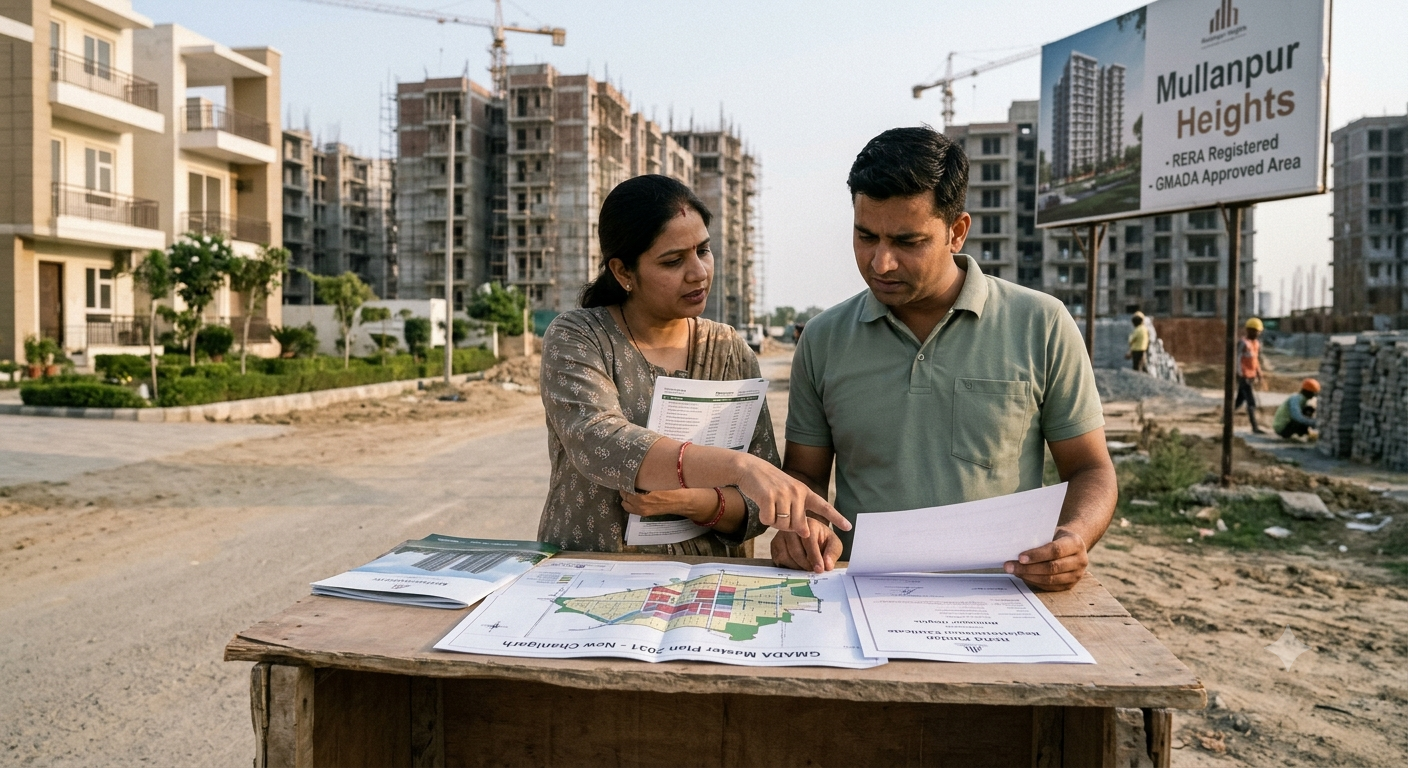
Buying a home is a big financial decision. When a project offers a good location, modern facilities and planned development, it is easy to get attracted by the price, sample flat and promises about future growth. But before booking a home, buyers should look beyond what is shown in brochures or explained by sales representatives. It is important to check what has been officially approved, which facilities are actually promised, and what can be confirmed through official records.
Aerotropolis and New Chandigarh are two different development areas associated with GMADA's planning work. Both may interest people looking to buy a home in the Greater Mohali region. However, buyers should not assume that every project in these areas has the same approvals, facilities or level of development.
Taking time to check a few important details before paying the booking amount can help buyers make a better-informed decision. It also helps them understand the actual status of a project instead of relying only on promises made during a site visit.
1. First, Understand What GMADA's Role Means for Your Home
GMADA, the Greater Mohali Area Development Authority, is responsible for planned development within its designated area and publishes planning documents, notifications, public notices and other official information.
However, a project's location in Greater Mohali does not automatically mean that GMADA has directly developed or approved every aspect of it. Different projects may involve different developers and approving authorities. Before considering a home, identify the exact project name, its location, the developer's legal name and the authority responsible for the relevant approvals.
Ask the seller to provide the approval details in writing. Do not rely only on statements such as “GMADA area,” “government-approved location” or “planned township.” These descriptions do not, by themselves, establish the approval status of an individual project.
2. Check the Official Planning Information for the Area
A project's surroundings can influence everyday life long after the purchase. Buyers should therefore look beyond the present appearance of the site.
GMADA publishes master plans and development information for different planning areas, including New Chandigarh. These documents help readers understand the broader planning framework and the intended use of different areas.
You can begin with the official GMADA Master Plans page.
When reviewing the relevant plan, consider the following:
- Does the project's location match the area identified by the seller?
- What does the plan show for the surrounding land?
- Are nearby facilities or proposed development zones shown in the plan?
- Are there planning restrictions or special development controls relevant to the location?
An important distinction: a facility shown in a master plan should not automatically be treated as a completed facility with a confirmed opening date. A plan explains the intended planning framework; it does not guarantee that every proposed development will be completed on a particular schedule. If the builder advertises a future school, healthcare facility, sports complex or other amenity, ask for the specific supporting document and check whether the facility is proposed, approved, under construction or operational.
3. Aerotropolis and New Chandigarh: Check the Exact Location, Not Just the Name
Both areas can be marketed using broad location names. Buyers should look beyond those names and verify the actual project location.
If you are considering Aerotropolis
GMADA's official website publishes notifications and public notices relating to Aerotropolis and its expansion pockets. These records can help buyers understand the planning and development context of the wider area.
Visit the GMADA notifications page and the public notices section.
If a project is advertised as being in or near Aerotropolis, ask the seller for its exact location and the applicable approval documents. Check that the documents relate to the same project and site being offered to you.
A notification concerning land acquisition or an expansion pocket does not, by itself, prove that a particular residential project is approved or that an individual home is affected. The details of the specific site must be checked.
If you are considering New Chandigarh
GMADA provides planning information for New Chandigarh, also known as Mullanpur in its development context.
Start with GMADA's About New Chandigarh information and its published master plans.
Compare the project's actual location with the relevant planning information. If the seller highlights nearby recreational, educational or healthcare facilities, verify the status of those specific facilities rather than assuming that every planned amenity is already available.
In either location, the project name alone is not enough. The exact site and the documents relating to it are what matter.
4. Verify the Project's Punjab RERA Registration
One of the most important checks for a buyer is whether the project is required to be registered under the applicable real estate regulations and, if so, whether it has the necessary registration. Punjab RERA provides an official facility to search registered projects and view available project details.
Visit the Punjab RERA registered-project search.
Search using the project name or promoter's name. Where available, review the registration number, registration validity, project details and other disclosed information. Compare these details with the information supplied by the builder.
Do not assume that a project is compliant simply because a salesperson provides a registration number. Check that the number belongs to the same project and that the details correspond to the home being offered.
Also remember that RERA registration and planning or building approvals are not interchangeable. One record should not be treated as proof that every other required approval has been obtained. The applicable registration requirements can vary by project and circumstances, so buyers should verify the rules that apply to their particular purchase.
5. Ask for the Approvals That Relate to the Actual Project
Brochures and advertisements are designed to present a project attractively. Official documents serve a different purpose: they help establish what has been permitted and under which conditions. Before paying a booking amount, ask the developer which approvals apply to the project and request copies or official references that can be checked.
Depending on the type and stage of the project, relevant records may include:
- Applicable planning or layout approval.
- Building-plan approval, where required.
- Punjab RERA registration, where applicable.
- Environmental or other statutory clearances, where required.
- Completion or occupancy documentation, where applicable to the project and stage of purchase.
Do not assume that every document applies in exactly the same way to every development. Ask the relevant authority or a qualified professional if you are unsure which approvals are required. Most importantly, check whether the documents cover the exact project, phase, building or unit being sold. An approval for one phase should not automatically be assumed to cover every other phase.
6. Find Out What You Are Actually Paying For
A home advertised at an attractive price may involve additional costs. Before committing, request a written cost breakdown. Check the basic sale price, payment schedule, applicable taxes and charges, parking costs, maintenance deposits and any other amounts included in the offer.
Ask which facilities are included in the sale and which may require separate payments. If the builder promises a clubhouse, landscaped areas, power backup or other amenities, ask whether the promise appears in the relevant project documents or contractual terms.
Read the booking form and agreement carefully. Pay particular attention to cancellation terms, refund conditions, possession timelines, delay provisions and any clauses that allow changes to the project or its facilities.
Do not rely on a verbal assurance when a promise could affect your decision to buy.
7. Check Possession and Completion Details
A home that is ready for occupation presents different questions from one that is still under construction. For a completed home, ask which completion or occupancy documents apply and whether the required documentation is available. Also check the condition of the actual unit, common areas, water supply, electricity, lifts, parking and access arrangements.
For an under-construction home, review the disclosed construction status, promised possession date, payment milestones and the project's applicable regulatory records. Visit the site if possible. Compare what you see with the written promises, but remember that a site visit alone cannot establish legal approval or compliance.
If the developer says a facility will be available later, ask for its current status and any written commitment relating to its completion.
8. Keep a Record of Every Important Promise
Before making a payment, retain copies of the brochure, price quotation, payment schedule, booking form, agreement and approval documents supplied to you. Keep written records of important discussions with the developer. If a promised feature or facility influenced your purchase decision, ask for it to be clearly documented.
Where information is unclear or inconsistent, seek clarification before proceeding. For a significant purchase, an independent property lawyer can help review the documents and identify questions that need to be resolved. Do not transfer money to an unfamiliar account or rely on urgency created by a salesperson without independently checking the payment instructions and the identity of the recipient.
Final Checklist Before Booking a Home
Before making your decision, make sure you have:
- Confirmed the exact project name, location and developer.
- Checked the relevant GMADA planning information.
- Verified Punjab RERA registration where applicable.
- Requested the approvals relevant to the project and its stage.
- Checked whether advertised facilities are existing, approved or only proposed.
- Reviewed the complete cost and payment schedule.
- Read the booking terms, cancellation conditions and possession commitments.
- Kept copies of the documents and important written assurances.
Final Thoughts
Aerotropolis and New Chandigarh may offer different opportunities for home buyers, but a location's reputation or future potential should never replace document verification.
A careful buyer looks beyond the brochure and asks three basic questions: What is officially approved? What is actually available? And what exactly am I agreeing to pay for?
GMADA's website and Punjab RERA's official records provide useful starting points, but the applicable approvals and legal requirements must be checked for the specific project. If important details remain unclear, resolve them before making a financial commitment.
You May Also Want to Know
Visit gmada.gov.in for official GMADA notices, property information, policies and updates.
You can also explore gmada.in for simple explanations of GMADA developments and their possible implications for residents and property allottees.
Important Disclaimer
gmada.in is an independent information portal. It is not affiliated with, endorsed by, or operated by the Greater Mohali Area Development Authority (GMADA), PUDA, the Government of Punjab, or any other government department.