Home Buyer's Guide
Plot Allotment vs Ownership Transfer vs Registry: What Is the Difference?
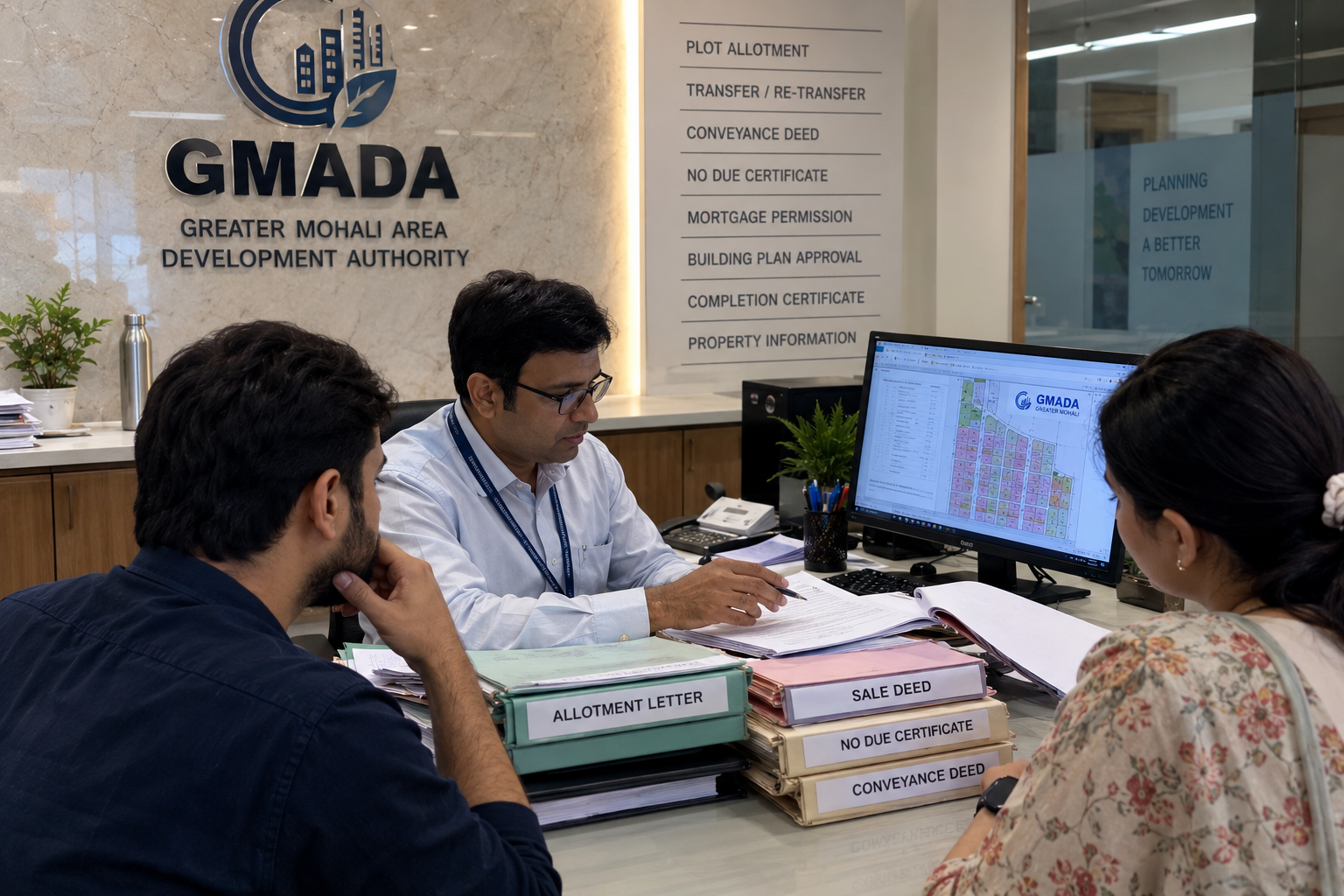
Plot Allotment vs Ownership Transfer vs Registry: What Is the Difference?
If you are buying, selling or already own a GMADA property in Greater Mohali, you may hear three terms repeatedly: Allotment. Transfer. Registry.
They are connected, but they do not mean the same thing. A person may have an allotment letter but still need further formalities. A sale deed may be registered, but GMADA records may still need to be updated. A property may also have pending dues, mortgage issues or a conveyance deed that has not yet been executed. Understanding these differences before paying for a property can help avoid confusion later.
1. What Is Plot Allotment?
Plot allotment is the stage at which GMADA allocates a property to an applicant or successful bidder under the applicable scheme, auction or allotment process. The allotment letter normally identifies important details such as:
- Name of the allottee
- Plot or property number
- Location
- Size or area
- Price
- Payment schedule
- Terms and conditions
- Construction conditions, where applicable
- Other obligations attached to the allotment
In simple words: Allotment tells you who GMADA originally allotted the property to and on what terms. An allotment letter is therefore an important document, but buyers should not assume that seeing an allotment letter alone is enough to complete a resale transaction.
2. What Is Ownership Transfer or Re-Transfer?
A property may later move from the original allottee to another person because of:
- Sale
- Gift
- Transfer deed
- Will
- Inheritance or natural succession
- Other legally permitted circumstances
For GMADA properties, this can involve updating the authority's own property records. GMADA currently provides separate procedures for:
- Permission for sale, gift or transfer
- Re-transfer on the basis of a registered sale, gift or transfer deed
- Transfer on the basis of a Will
- Transfer through natural succession
This is an important distinction because registration of a deed and updating GMADA's records are related, but they are not necessarily the same administrative step.
3. What Is Registry?
“Registry” is the common term people use for registration of a property document, such as a sale deed, before the appropriate Sub-Registrar. The registered deed records the transaction between the parties through the government registration system.
In simple terms: Registry records the legal document through which the property transaction has taken place. However, buyers should avoid assuming that registry alone answers every question about a GMADA property. The registered deed should be checked together with the property's:
- GMADA records
- Allotment or re-allotment documents
- Transfer status
- Outstanding dues
- Conveyance deed status
- Mortgage position
- Other applicable approvals or restrictions
Allotment, Transfer and Registry — Quick Comparison
Process
What it mainly means
Allotment
GMADA allocates the property to the original allottee under applicable terms
Transfer / Re-transfer
GMADA records are changed to reflect another eligible owner or transferee
Registry
A sale, gift or other relevant deed is formally registered through the registration system The exact process can vary depending on the type of property and the manner in which ownership changes.
Does an Allotment Letter Mean Everything Is Complete?
Not necessarily. The allotment letter is extremely important, but buyers should check what has happened after the original allotment. For example:
- Have all instalments been paid?
- Are there any outstanding GMADA dues?
- Has possession been offered or delivered?
- Has a conveyance deed been executed?
- Has the property already been transferred?
- Is there any mortgage?
- Are construction obligations pending?
The answers can materially affect a transaction.
What Is a Conveyance Deed?
A conveyance deed is another important term GMADA property owners may encounter. GMADA currently has a separate procedure for execution of a conveyance deed. Its published checklist includes documents such as the allotment/re-allotment letter and a No Due Certificate.
This is why buyers should ask: “Has the conveyance deed already been executed?” rather than checking only whether an allotment letter exists. The conveyance deed status can be an important part of understanding how far the property's documentation has progressed.
What Is a No Due Certificate?
A No Due Certificate (NDC) helps establish whether outstanding amounts are reflected against the property in GMADA's accounts. GMADA currently provides a separate service for obtaining a No Due Certificate and advises applicants to check the property's account statement and clear applicable dues. For a resale buyer, this is a very useful check. Do not assume that because the seller possesses the property, all authority dues have automatically been cleared.
Does GMADA Permission Matter Before a Sale or Transfer?
It can, depending on the property and applicable terms. GMADA currently maintains a specific citizen service for permission for sale/gift/transfer. It also has a separate procedure for re-transfer after a registered sale, gift or transfer deed. This is why a buyer should check the exact requirements applicable to that particular property instead of assuming that every GMADA property follows an identical process.
Registered Sale Deed vs GMADA Re-Transfer
This is one of the most useful distinctions for buyers. Suppose: A owns a GMADA plot → A sells it to B → the relevant sale deed is registered. B should then also check whether the required GMADA re-transfer/change in property records has been completed.
GMADA's current re-transfer procedure specifically refers to a certified copy of the registered sale/gift/transfer deed and original transfer permission. So the buyer should verify both:Registered transaction + GMADA property record rather than checking only one of them.
What About Mutation?
Mutation is another term buyers often confuse with registry. A registered deed and mutation are not the same thing. Punjab's official land-record system separately provides a process for mutation on the basis of a registered deed. The state portal also allows users to search registered deeds.
Where revenue records are relevant to the property, buyers should check whether the appropriate mutation has also been entered. In simple terms: Registry records the deed. Mutation updates the relevant revenue record. The applicability and significance of revenue records can differ depending on the nature of the property.
What If the Property Came Through a Will or Inheritance?
Not every ownership change happens through a sale. A GMADA property may pass to another person through:
- Registered Will
- Unregistered Will
- Natural succession after death
- Gift
GMADA currently has separate procedures for these situations. For example, its Will-based transfer procedure can require documents such as the Will, death certificate, beneficiary details, affidavits and mortgage clearance, depending on the circumstances. Therefore, a buyer dealing with an inherited property should verify how the present owner's name entered the GMADA record.
Before Buying a Resale GMADA Plot, Check These Documents
A practical buyer checklist should include, where applicable:
- Original allotment or re-allotment letter
- Seller's current GMADA property record
- Registered sale/gift/transfer deed
- Transfer or re-transfer status
- No Due Certificate or latest account statement
- Conveyance deed status
- Possession documents
- Mortgage or loan status
- Mutation/revenue record, where relevant
- Identity of the recorded owner
- Any court dispute or legal restriction
- Construction or building-related compliance, if the property is constructed
- Applicable land use
- Any transfer restriction contained in the original allotment terms
The exact documents required can vary, but these checks can reveal problems before money changes hands.
What If the Seller's Name Does Not Match GMADA Records?
Treat this as something that needs clarification before proceeding. There may be a legitimate reason—for example:
- An inheritance has not yet been recorded
- Re-transfer is pending
- Mutation is pending
- A registered transaction has occurred but GMADA records have not yet been updated
- A Will-based transfer is under process
But the mismatch should be explained through proper documentation. Do not rely only on a verbal statement such as: “Registry ho chuki hai, naam baad mein change ho jayega.” Verify the actual status.
What About Outstanding Loans or Mortgages?
A buyer should also check whether the property has been mortgaged. GMADA maintains a separate service for permission to mortgage, which itself shows that mortgage status can be relevant to authority-managed properties. If a loan has previously been taken against the property, buyers should check whether the lender's charge has been properly cleared and whether the relevant records reflect that clearance.
What If the Property Is Constructed?
For a built-up property, ownership documents are only part of the picture. Depending on the property, buyers may also need to check:
- Approved building plan
- Construction compliance
- Completion certificate
- Occupation/occupancy certificate
- Water and sewerage status
- Outstanding building-related charges
GMADA's current citizen-services section separately lists building-plan approval and completion/occupation certification services.
Common Mistakes Buyers Should Avoid
Mistake 1: “There is an allotment letter, so everything is clear.”
Not necessarily. Check dues, transfer history and other documents.
Mistake 2: “Registry is done, so GMADA records do not matter.”
For a GMADA property, authority records and applicable transfer procedures can still matter.
Mistake 3: “The seller has possession, so the paperwork must be complete.”
Possession and documentary status are not the same thing.
Mistake 4: “There are no dues because the seller never received a demand notice.”
Check the official account or No Due status rather than relying on assumptions.
Mistake 5: “Mutation and registry are the same.”
They are different records and processes.
A Simple Example
Imagine GMADA originally allots a plot to Person A. Later, Person A decides to sell it to Person B. Depending on the applicable terms and status of the property, the transaction may involve:
Original GMADA Allotment → Transfer Permission, where required → Registered Sale/Transfer Deed → GMADA Re-transfer/Record Update → Other applicable record updates
If the conveyance deed, dues, mortgage or mutation are also relevant, those should be checked separately. This is why property ownership cannot always be understood from one document alone.
Which Document Is Most Important?
There is no single answer for every transaction. Different documents establish different parts of the property history. A careful buyer should try to understand the complete chain, including:
Who received the original allotment → How the property changed hands → What deed was registered → Whose name appears in current GMADA records → Whether dues and other obligations are clear
That complete picture is much safer than relying on one document.
What Should Buyers Do Before Paying a Token Amount?
Before paying a substantial token or advance, consider verifying:
- Who GMADA currently recognises in its records
- The property's allotment and transfer history
- Registered deeds
- Current dues
- Conveyance deed status
- Mortgage status
- Applicable transfer restrictions
- Litigation, if any
- Revenue records, where relevant
For a high-value or complicated transaction, professional legal verification can be worthwhile before committing funds.
Current GMADA Services Buyers Can Check
GMADA's current citizen-service portal includes services relating to:
- Sale/gift/transfer permission
- Re-transfer following registered deeds
- Conveyance deed
- No Due Certificate
- Transfer through Will
- Natural succession
- Mortgage permission
- Property details
- Building-plan approval
- Completion/occupation certificates
These separate services are a useful reminder that property documentation is a chain of records and approvals, not simply one “registry” document.
What Property Buyers Should Remember
The simplest way to understand the difference is: Allotment tells you how the property originally came from GMADA. Transfer or re-transfer tells you how GMADA's records changed when ownership moved to another person. Registry records the relevant deed through the government registration system. And depending on the property, you may also need to check:
Conveyance deed + No Due Certificate + mortgage + mutation + construction approvals
Before buying a GMADA property, look at the complete documentation chain rather than relying on a single paper.
You May Also Want to Know
For official GMADA property-transfer procedures, citizen services, conveyance deed information and property-related records, visit gmada.gov.in.
For simplified information about Greater Mohali property, development, infrastructure, public notices and GMADA procedures, visit gmada.in.
Important Disclaimer
gmada.in is an independent information portal and is not affiliated with, endorsed by or operated by the Greater Mohali Area Development Authority (GMADA), PUDA, the Government of Punjab or any other government department.