GMADA News & Updates
The Land Is Yours. So Who Decides What You Can Build There?
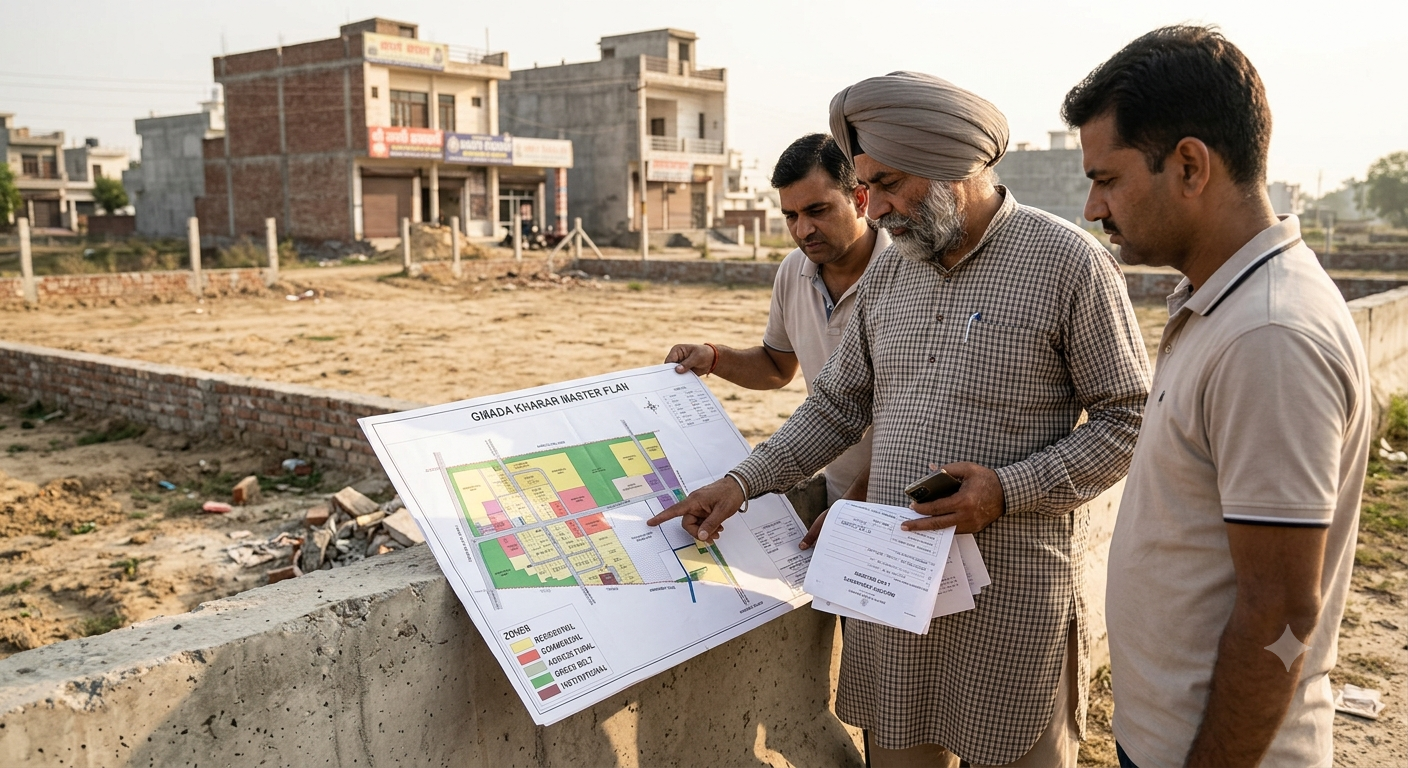
Imagine you have a piece of land. You have the documents. You know the location. You know its boundaries.
As the owner, it feels obvious that the next decision should be yours too. Maybe you want to build a house. Maybe you are thinking about a shop. Maybe you have a completely different plan for the site.
Then comes a question that many people may not think about until they actually want to develop the land:
“If the land belongs to me, why can’t I simply decide what to build on it?”
That question sounds simple.
The answer isn't.
Owning the Land Doesn't Mean Every Use Is Allowed
Land ownership and land use are two different things. A person can own a piece of land, but the way that land can be developed is also affected by the planning framework applicable to that area. GMADA's planning documents divide areas into different land-use categories. Depending on the applicable plan, these can include residential, commercial, mixed use, industrial, recreational, rural/agricultural and other designated uses.
The purpose is to make sure that development in an area follows an overall plan rather than every individual plot being developed independently. This is why two pieces of land that look almost identical from the outside can have very different development possibilities. One may be planned for residential use.
Another may be intended for commercial or institutional use. Another may fall within an agricultural or other designated area.
So before asking “What do I want to build?”, there is another question worth asking:
“What is this land planned for?”
That one question can save a lot of confusion later.
Why Does Planning Matter So Much?
Think about what would happen if every landowner could use land in any way they wanted. A residential area could suddenly have activities that create heavy traffic. A planned commercial area could develop without the infrastructure needed to support it. Important open, recreational or public-use areas could gradually be used for purposes they were never planned for.
The problem would not affect only the owner of that particular plot. It could affect the people and development around it as well. That is why planning looks beyond one individual piece of land. GMADA's regional planning documents describe zoning as a way of ensuring that different land uses are compatible and fit into the wider development of the planning area.
In simple terms, a city cannot work like a collection of completely separate plots. Every plot is part of something bigger.
So What If Your Plan Doesn't Match the Existing Use?
This is where things get more interesting. Suppose the land has one planned use, but you have another use in mind. You cannot simply assume that ownership changes the planned use. There are separate planning and permission processes for situations where a different land use is proposed. GMADA provides information and procedures relating to Change of Land Use (CLU) for applicable cases.
The exact requirements depend on the proposal and the applicable planning framework. This is important because wanting to use land differently and being permitted to use it differently are not the same thing. And that difference can matter before you spend money on drawings, construction or a business plan.
Even After the Land Use Question, There Is Another Question
Let's say your proposed use is permitted. Does that automatically mean you can start building? Not necessarily. The proposed building itself may still need to meet the applicable building rules and approval requirements. GMADA provides a separate process for building-plan approval/sanction. Its official information describes procedures for building-plan sanction, including provisions for certain residential plots and a self-certification option through GMADA-empanelled architects in specified cases.
So there can be several different questions involved:
- What is the land meant to be used for?
- Is the activity you are planning permitted there?
- If a different use is proposed, is a change-of-land-use permission applicable?
- Does the building you want to construct meet the applicable requirements?
These are not all the same question. And that is where people can sometimes get confused.
The Map Can Tell You Something Your Plot Cannot
Stand on a piece of land and it may look completely ordinary. A planning map can tell a different story. GMADA's master-plan documents show different land-use zones, roads, utilities, institutional areas, recreational areas and other planned elements.
For example, the Kharar master plan identifies different categories including residential, mixed use, institutional/government buildings, parks, sports and recreation, rural/agriculture and other planned uses.
This is why checking the applicable plan can be more useful than simply looking at what is physically around the land today. What exists today is one thing. What the approved planning framework allows or proposes is another.
“But My Neighbour Is Already Doing It…”
This is another situation that can create confusion.
You may see a particular activity happening nearby and naturally think:
“If they can do it, why can't I?”
But another site may have different planning conditions, permissions, approvals or an existing legal status. So what is happening on the neighbouring plot should not automatically be treated as permission for your own land.
Your own site's applicable planning and development requirements still matter. That is why comparing your situation with someone else's can sometimes give you the wrong answer.
The Most Important Check Comes Before Construction
When people think about developing land, they often start with the visible part:
- The building,
- The shop,
- The office,
- The layout,
- The design.
But the less visible question comes first:
Is this use allowed here?
That is where master plans and zoning become important. GMADA's planning documents describe the master plan as a framework for land use and development, with zoning regulations guiding the use of land. The documents also state that development is to conform to the applicable master plan.
So checking the planning position before making major plans is not just a technical formality. It can prevent you from planning something that does not fit the applicable rules.
Your Land Is Yours — But the Land Is Also Part of a City
This is probably the easiest way to understand the whole issue.
Ownership answers one question: “Whose land is it?”
Planning answers another:
“How can this land be used and developed within the larger area?”
Both matter. And neither question automatically answers the other. That is why GMADA's work involves much more than individual plots. Its planning framework looks at how different uses fit together across larger areas, while development and building permissions deal with what can actually be done on a particular site.
Before You Build, Ask One More Question
If you own land and have plans for it, the safest starting point is not simply to ask:
“What can I afford to build?”
Ask:
“What is this land permitted to be used for?”
Then check the applicable master plan or zoning information and the permissions relevant to your proposed development. Because the most expensive mistake may not be building the wrong thing. It may be planning the wrong thing from the beginning.
For current requirements, users should check the applicable GMADA master plan, zoning information and official development/approval procedures for their particular site, because requirements can vary according to location, land use and the type of development proposed.
You May Also Want to Know
For official information about master plans, zoning, Change of Land Use (CLU), building-plan approval and other development-related permissions, visit gmada.gov.in.
For simple explanations of GMADA planning, land use, development, property matters and other Greater Mohali-related topics, visit gmada.in.
Important Disclaimer
gmada.in is an independent information portal and is not affiliated with, endorsed by or operated by the Greater Mohali Area Development Authority (GMADA), PUDA, the Government of Punjab or any other government department.