Policies & Regulations
Social Impact Assessments in GMADA Land Acquisition: What They Mean, Why They Matter, and How the Process Works
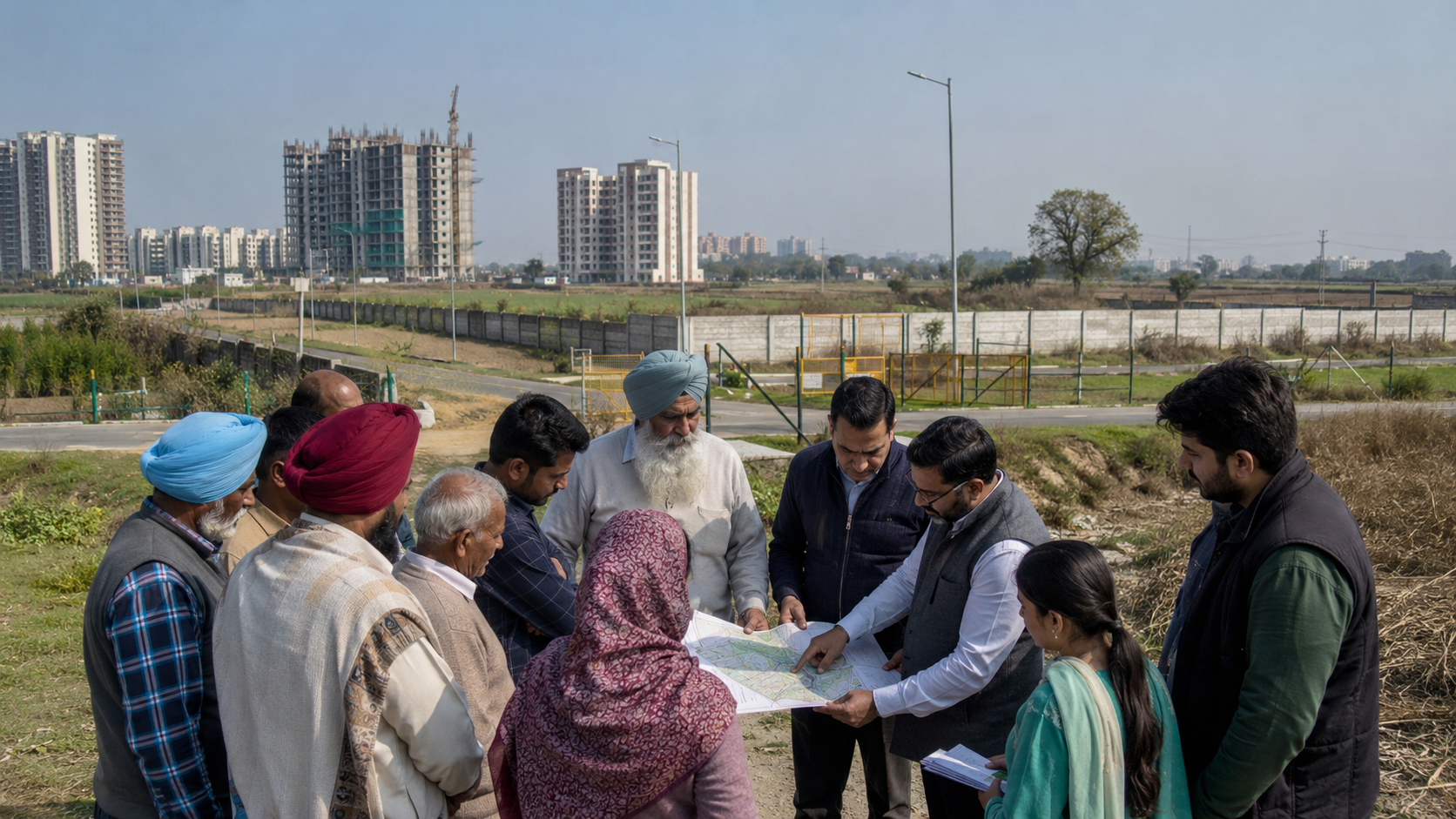
Social Impact Assessments in Greater Mohali: Why They Matter
As Greater Mohali continues to grow, new roads, residential projects, commercial areas and other development works often require land. While such projects can bring better infrastructure and new opportunities, they can also affect people who live, work or own land in the areas involved.
This is where Social Impact Assessments, or SIAs, become important.
An SIA looks at how a proposed land-acquisition project may affect local communities before the project moves further. It helps authorities understand not only the physical impact of development, but also how people’s livelihoods, social relationships, access to services and overall quality of life may be affected.
In a rapidly developing region like Greater Mohali, this process can play an important role in making development more balanced and responsible.
Why SIAs Matter in a Growing Greater Mohali
Urban development is changing many parts of Greater Mohali. As new residential areas, infrastructure projects and commercial developments expand, some villages and communities may experience major changes in land use, access, movement and local economic activity.
These changes can bring benefits, but they may also create challenges.For example, land acquisition may support a new road or township, but it may also affect:
- Homes and property
- Local businesses
- Livelihoods
- Community networks
- Access to schools, healthcare or other services
- Long-established social and cultural connections
An SIA helps identify these possible effects early so they can be considered during project planning.
How the SIA Process Works
The SIA process is not only about studying land on paper. It also involves understanding the people connected with that land. Residents, landowners, local businesses, community organisations and other affected groups may be consulted to understand how a proposed project could change their daily lives.
This community involvement is important because official records alone may not show the full social impact of a development. Local residents can provide information about:
- How land is currently used
- Dependence on local businesses or agriculture
- Community facilities
- Travel and access patterns
- Sources of income
- Social and cultural connections to the area
By bringing these perspectives into the assessment, an SIA can give decision-makers a more complete picture.
Main Objectives of a Social Impact Assessment
1. Understanding the Social Impact
The first objective is to identify both the positive and negative effects of a proposed project. A development may improve roads, services or economic opportunities, but it may also create disruption for people already living or working in the area.
The purpose of the assessment is to consider both sides rather than looking only at the expected benefits of the project.
2. Studying the Local Population
SIAs may also examine the social and economic profile of affected communities. This can include factors such as:
- Population
- Income and employment
- Education
- Access to healthcare
- Housing conditions
- Dependence on local land or resources
This information helps authorities understand which groups may be more affected and what kind of support may be required.
3. Planning for Resettlement and Livelihoods
In some cases, land acquisition may require people to relocate or may affect their source of income. An SIA can help identify these risks before the project proceeds. Resettlement planning is therefore an important part of the process where displacement is involved. The aim is to reduce unnecessary disruption and consider how affected people can continue their lives and livelihoods after acquisition.
How SIAs Influence Project Decisions
SIA findings can play an important role in deciding how a project moves forward. If the assessment identifies serious social concerns, authorities may need to reconsider parts of the proposal, change the project design or introduce measures to reduce the impact.
The findings may also help decision-makers understand whether the expected public benefits of a project justify the social costs involved. This makes the SIA more than a procedural formality. Ideally, it should help improve the quality of decision-making before land is acquired.
Why Community Participation Is Important
People living in an affected area often understand local conditions better than anyone else. Their involvement can help identify issues that might otherwise be missed. For example, a development plan may look straightforward on a map, but residents may point out that a particular route affects access to farms, businesses, places of worship, schools or community facilities.
Stakeholder participation therefore helps make the assessment more practical and grounded in local realities. It can also improve public confidence when people feel that their concerns have been heard and recorded.
The Need for Clear Communication
Carrying out an SIA is only one part of the process. The findings also need to be communicated clearly. Residents should be able to understand:
- What impacts were identified
- What concerns were raised
- What recommendations were made
- How those recommendations influenced the project
- What measures are proposed to reduce negative impacts
If technical reports are difficult to access or understand, people may remain uncertain even after the assessment is complete. Clear summaries, public notices and accessible explanations can make the process easier to follow and improve trust between authorities and affected communities.
What Happens if an SIA Finds Serious Problems?
This is one of the most important questions for residents. If an assessment identifies major negative social impacts, people naturally want to know what happens next.
There should be clarity about:
- Whether the project can be modified
- Whether the amount of land required can be reduced
- What mitigation measures may be introduced
- How affected families or businesses will be supported
- Whether resettlement or rehabilitation measures are required
- How objections and concerns will be considered
Clear procedures are important because an SIA is most useful when its findings lead to meaningful action. If serious concerns are identified but the next steps are unclear, public confidence in the process can weaken.
Why Public Access to SIA Information Matters
There is increasing public interest in understanding how development decisions are made. For landowners and residents, seeing examples of how previous SIA findings affected a project can make the process easier to understand.Case studies can show whether:
- Project boundaries were changed
- Land requirements were reduced
- Access roads were modified
- Resettlement measures were introduced
- Community concerns led to changes
Such examples can help people understand the practical role of SIAs rather than viewing them only as technical reports.
Learning From Other Regions
Greater Mohali can also benefit from studying how Social Impact Assessments are carried out elsewhere. Other cities and regions may offer useful examples of:
- Better public consultation
- Clearer disclosure of findings
- Stronger resettlement planning
- More transparent impact assessment methods
- Better monitoring after a project begins
Learning from successful practices elsewhere can help improve the quality of SIAs used for future projects in Greater Mohali. Urban development is constantly evolving, and assessment methods should improve with it.
Why Better SIAs Can Lead to Better Development
Development and community welfare do not have to work against each other. Well-designed Social Impact Assessments can help authorities understand where problems may arise and consider them before major decisions are taken.
For Greater Mohali, this becomes increasingly important as urban expansion reaches more villages, residential areas and communities. A strong SIA process should aim to:
- Identify social impacts early
- Listen to affected people
- Consider both benefits and costs
- Protect livelihoods where possible
- Plan properly for resettlement when required
- Explain findings clearly
- Ensure that concerns influence decision-making
When these steps are followed properly, development can become more transparent, informed and responsive to the people it affects.
What This Means for Greater Mohali
Social Impact Assessments are ultimately about understanding the human side of development. Roads, townships and commercial projects may be visible signs of growth, but every major development also affects people, communities and existing ways of life.
As Greater Mohali continues to expand, the quality of its SIA process will be an important part of ensuring that development is not only faster, but also more thoughtful and responsible. Better assessment, stronger community participation and clearer communication can help create a planning process in which growth and community welfare move forward together.
You May Also Want to Know
For official notifications, land acquisition documents, project updates and other records related to the Greater Mohali Area Development Authority, visit gmada.gov.in.
For simplified explanations, development updates, land acquisition news, infrastructure information and useful context related to Greater Mohali, visit gmada.in
Important Disclaimer
gmada.in is an independent information portal created to provide simplified updates and general information related to Greater Mohali, GMADA projects, land acquisition, infrastructure and development.