GMADA News & Updates
What Is a GMADA Authority Meeting and Why Should Residents Care?
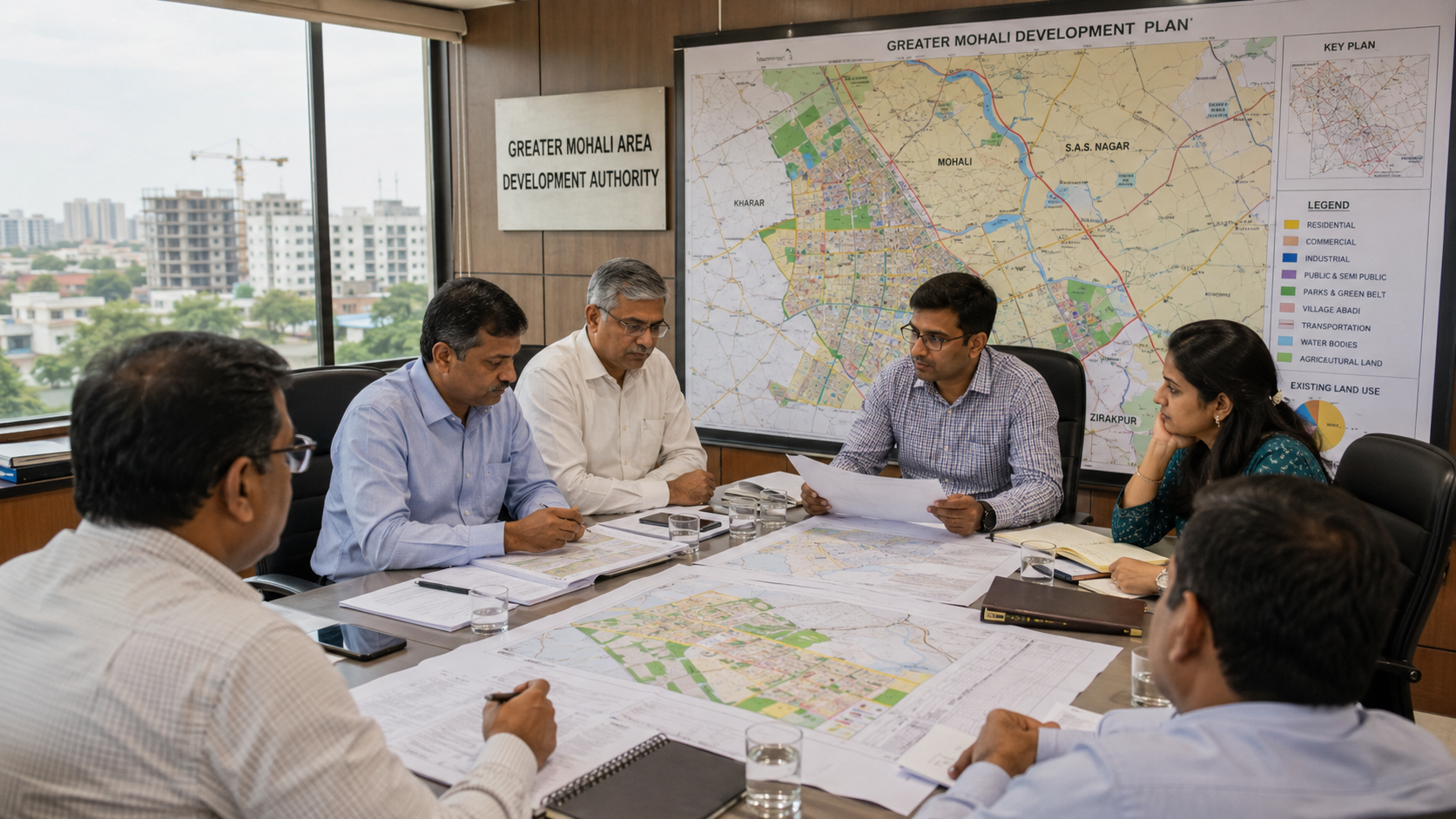
What Is a GMADA Authority Meeting and Why Does It Matter for Greater Mohali?
Many important decisions about the development of Greater Mohali pass through different stages before anything changes on the ground. One of those stages can be a GMADA Authority Meeting.
These meetings are important because major proposals relating to urban development, land, infrastructure, policies, projects and administrative matters may be placed before the Greater Mohali Area Development Authority for consideration.
For residents, landowners and property buyers, understanding what happens in these meetings can make it easier to follow Greater Mohali’s development without confusing an early approval with a completed project.
What Is a GMADA Authority Meeting?
A GMADA Authority Meeting is a formal meeting in which matters concerning the functioning and development responsibilities of the Greater Mohali Area Development Authority may be considered. Official GMADA records show that Authority Meeting agendas can include matters such as:
- Land acquisition
- New development proposals
- Infrastructure projects
- Policy matters
- Land allotment
- Use or management of GMADA property
- Administrative and financial proposals
- Follow-up action on decisions taken in earlier meetings
For example, an official GMADA Authority agenda has included a specific item relating to the acquisition of land for the Aerotropolis Extension in S.A.S. Nagar.
This shows why these meetings are worth following: They can reveal where an important proposal currently stands within GMADA’s decision-making process.
What Is an Agenda Item?
Before an Authority Meeting, different proposals may be listed as individual agenda items. An agenda item generally tells readers what subject is being placed before the Authority for consideration.
For example, an agenda could include a matter concerning:
- Acquisition of land
- Development of a new urban area
- Infrastructure expenditure
- Allotment of a site
- Amendment of an existing policy
- Review of an earlier decision
However, seeing a project listed on an agenda does not by itself mean that it has been finally approved. The meeting proceedings are important because they show what decision was actually taken.
Agenda and Proceedings Are Not the Same Thing
This distinction is particularly important. An Agenda tells you what was proposed for discussion. The Proceedings record the decision taken during or after the meeting. Therefore, readers should avoid drawing conclusions from an agenda alone.
GMADA maintains an official Meetings – Agenda & Proceedings section where both types of documents are published for Authority Meetings. The official page currently lists several meetings along with their agendas and proceedings.
What Kind of Matters Can Affect Residents?
Authority Meeting decisions can relate to projects that may eventually affect different parts of Greater Mohali. These may include:
- New residential developments
- Commercial projects
- Land acquisition proposals
- Roads and infrastructure
- Public utilities
- Changes in policies
- Development of new sectors
- Use of authority-owned land
The important word here is eventually. A decision taken at an Authority Meeting may be an important step, but additional planning, statutory approvals, land acquisition, tendering or engineering work may still be required before residents see any physical change.
Does Approval Mean Construction Will Start?
Not necessarily. One of the most common misunderstandings is that an Authority approval means a project is ready for construction. In reality, a project may move through several stages, such as:
Proposal → Authority Consideration → Approval → Statutory Process → Detailed Planning → Tendering → Work Award → Construction → Completion
Not every project follows exactly the same sequence, and some stages may overlap. The key point is that an Authority decision is one stage in a larger process. Residents should therefore look for subsequent official documents before assuming that construction is about to begin.
Why Landowners Should Pay Attention
Authority Meetings can be particularly relevant when land acquisition or development of a new project is being considered. However, landowners should remember that an Authority Meeting agenda or decision is not normally the document that finally determines whether a specific parcel of land is being acquired. For that, landowners should check the relevant statutory documents, including:
- Village name
- Khasra numbers
- Land area
- Acquisition notification
- Applicable legal section
- Public hearing or objection details
- Subsequent government orders
Official GMADA notifications currently include several separate land-acquisition proceedings relating to Aerotropolis projects and different villages in S.A.S. Nagar. This is why project-level decisions and parcel-level acquisition notices should not be confused.
Why Property Buyers Should Care
Authority Meeting records can help buyers understand what projects or policy matters are being considered. But they should not be used as a shortcut for making a property decision. An Authority approval does not guarantee:
- Construction will begin immediately
- Infrastructure will be completed quickly
- A proposed road will become operational soon
- Property prices will increase
- A commercial market will automatically develop
Property decisions should still be based on factors such as legal status, approved land use, connectivity, infrastructure, location and official project progress.
How Often Are GMADA Authority Meetings Held?
There does not appear to be a simple fixed public schedule stating that meetings must occur every month or at one specific interval. The official GMADA meeting archive shows that Authority Meetings have been held on different dates depending on administrative and development requirements.
For example, the official archive lists several Authority Meetings during the year, each with separate agendas and proceedings. Instead of assuming a fixed frequency, residents should check the official meetings page for the most recent records.
Can Residents Attend GMADA Authority Meetings?
Residents should not assume that Authority Meetings function like open public hearings. The official meeting records primarily provide agendas and proceedings of the Authority’s formal decision-making meetings.
Where a development matter requires public participation, objections, hearings or disclosure, those opportunities are normally communicated through the relevant statutory notice or public-notice process.
For example, land-acquisition proceedings may separately involve public notices and legally defined stages that allow affected people to respond. Residents should therefore follow the specific notice relating to their project or land, rather than assuming participation happens through the Authority Meeting itself.
How Can Residents Check What Was Decided?
The most useful approach is to check both the Agenda and the Proceedings. When reading an Authority Meeting record, look for:
- Meeting number
- Agenda item number
- Name of the project
- Location
- Proposal placed before the Authority
- Decision recorded in the proceedings
- Conditions attached to the decision
- Whether further approval is required
- Whether another department must take action
- Whether later notifications or tenders have been issued
This can help readers understand whether a project is merely being discussed or has moved to another stage.
Authority Meeting vs Public Notice vs Tender
These terms are often confused, but they mean different things.
Authority Meeting
A proposal or policy matter may be considered and decided at the Authority level.
Public or Statutory Notice
A formal notice may communicate a legal or administrative step, particularly in matters such as land acquisition.
Tender
A tender generally relates to procurement of works or services.
Work Award
This usually indicates that a contractor or agency has been selected for execution.
Construction
This is the physical stage where work begins on the ground. Understanding these differences prevents an early-stage proposal from being mistaken for a completed development.
Why Authority Meeting Records Matter
Authority Meeting records provide useful insight into how Greater Mohali development decisions move forward. They can help residents understand:
- Which proposals are under consideration
- Whether a project has received Authority-level approval
- Whether an earlier decision has been reviewed
- What conditions may have been attached
- What might happen next
For people following major developments such as Aerotropolis, new sectors, infrastructure projects or land-related decisions, these documents can provide valuable context.
What Should Residents Check Next?
After reading about a decision in an Authority Meeting, the next step should be to look for supporting official documents. Depending on the project, these may include:
- Government notifications
- Land-acquisition notices
- Master-plan documents
- Public notices
- Tender documents
- Corrigenda
- Engineering approvals
- Subsequent Authority Meeting proceedings
This helps build a complete picture of the project instead of relying on one announcement.
What This Means for Greater Mohali
GMADA Authority Meetings can provide an important view into how planning and development decisions are being considered.
But an Authority Meeting should be understood as part of the process—not the entire process.
For residents, landowners and buyers, the most useful approach is to follow the sequence of official documents:
Proposal → Decision → Notification → Tender → Execution → Completion
By understanding what stage a project has actually reached, people can follow Greater Mohali’s development more accurately and avoid making decisions based on incomplete information.
You May Also Want to Know
For official GMADA Authority Meeting agendas, proceedings, notifications and project documents, visit gmada.gov.in.
For simplified explanations of Greater Mohali development, land acquisition, infrastructure, master plans and public notices, visit gmada.in.
Important Disclaimer
gmada.in is an independent information portal and is not affiliated with, endorsed by or operated by the Greater Mohali Area Development Authority (GMADA), PUDA, the Government of Punjab or any other government department.