GMADA News & Updates
You’re Ready to Sell Your GMADA Property — But Is It Ready to Be Sold?
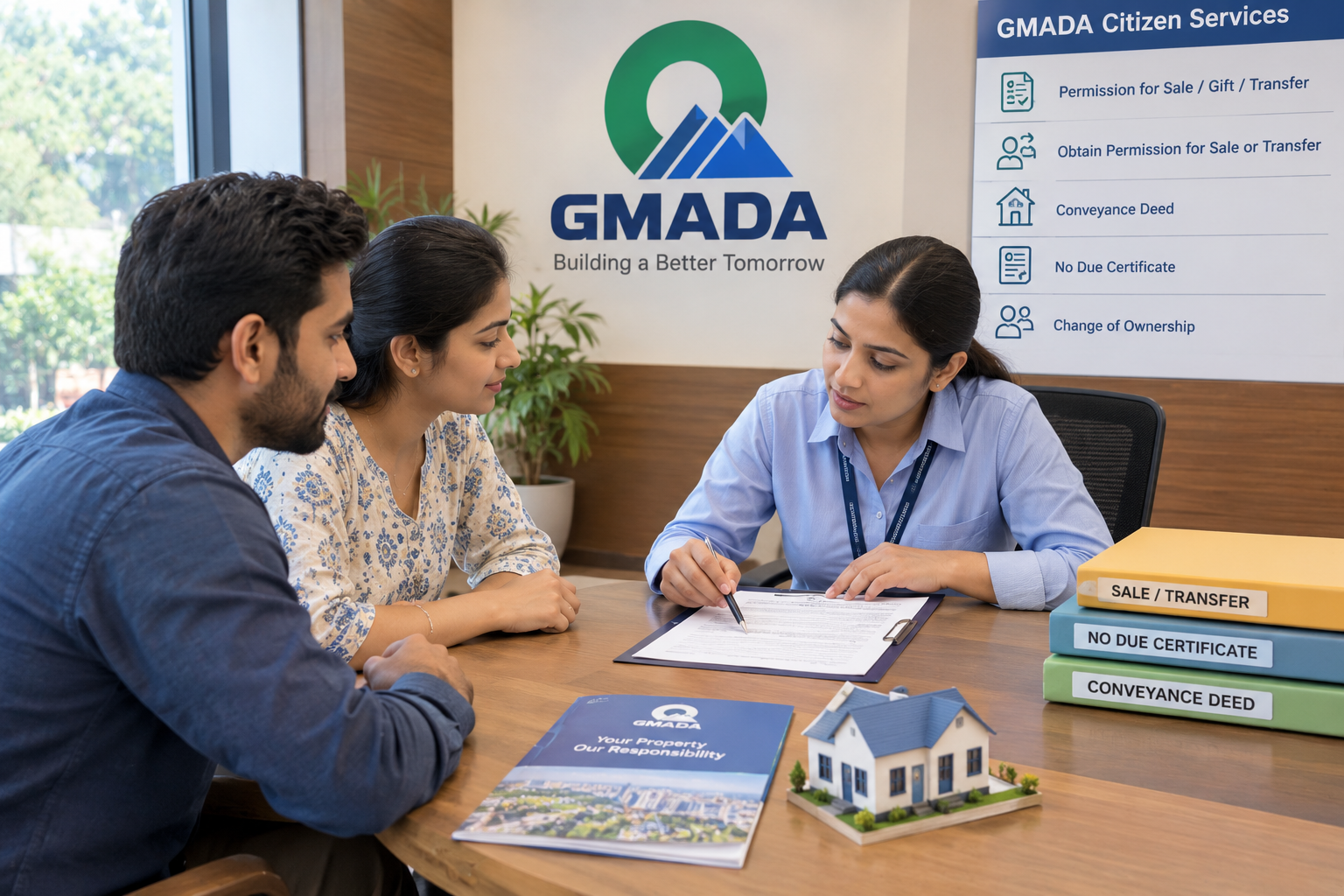
You have decided to sell your GMADA property. Maybe your family is moving to another city. Maybe you need to invest somewhere else. Or maybe you have simply decided that it is the right time to sell. You find a buyer, discuss the deal and start thinking about the sale.
Then someone asks:
“Have you got the required GMADA permission?”
That is when many property owners realise that selling a GMADA property may involve more than finding a buyer and signing the papers. GMADA has separate services for permission to sell, gift or transfer property, and for completing the transfer after a registered sale, gift or transfer deed. So before you move ahead, it is worth checking what is actually required for your property.
Finding a Buyer Is Only One Part
When people think about selling a property, the buyer is usually the first thing on their mind. But with a GMADA property, there may be some Authority-related work to complete as well. GMADA’s current Citizen Services page specifically lists “Grant of Permission for Sale/ Gift/ Transfer” and “Obtain Permission for Sales or Transfer” as separate services. It also provides services for conveyance deeds, no-dues and change of ownership.
That means it is better not to assume that the sale is complete simply because you and the buyer have agreed on the price. There can be another step with the Authority.
What Should You Check Before the Sale?
Start with your own property records.Look at the allotment or re-allotment documents you have and check the current position of your property. One thing GMADA specifically asks applicants to consider is whether there are outstanding dues. Its procedure for a No Due Certificate tells applicants to check the property account statement on the website and deposit any amount due.
If there is a discrepancy in the account, GMADA asks for supporting documents. This is why checking your account before starting the sale process can save trouble later. You do not want to reach the final stage of a transaction and then discover that an old amount is still showing against the property.
What Is the Role of a No Due Certificate?
The name itself gives you a good idea. A No Due Certificate helps establish the position of dues recorded against the property. GMADA currently lists issuance of a No Due Certificate as a separate service. Its published procedure says the applicant should check the property's account statement and deposit the due amount, where applicable.
This does not mean that every sale automatically follows exactly the same document path. The documents needed can depend on the property and the stage of the transaction. But when you are preparing to sell, checking the dues is one of the sensible things to do early.
You May Also Need Permission From GMADA
GMADA's official “How Do I?” section includes a specific service for permission for sale, gift or transfer. The current procedure page asks for the application and a certified copy of the relevant sale deed, transfer deed, gift deed, or permission-to-transfer letter issued by GMADA, depending on the case. The stated time limit on that page is 10 working days.
This is why the word “permission” matters. The exact requirement depends on the situation, so a property owner should check the current GMADA procedure instead of relying on what worked for someone else’s property.
What If Your Property Still Has a Loan or Mortgage?
This is another detail that should not be left until the last minute. GMADA lists permission to mortgage as a separate property service. Its published sale/transfer checklist also refers to clearance against a loan or mortgage, if any.
So, if your property is connected with a loan or mortgage, check its current status before you proceed with the sale. A property transaction can become more complicated when another financial liability is still attached to it.
What Happens After the Sale?
There is an important distinction here. Selling the property and updating the Authority's ownership record are related, but they are not necessarily the same step. GMADA's Citizen Charter separately lists “Change of ownership letter after sale deed” as a service. The current charter gives a time limit of 5 working days for this service. It also lists separate time limits for permission to sell and transfer.
So once the sale deed has been completed, there may still be a formal ownership-update step with GMADA. This is something a seller and buyer should keep in mind rather than assuming that the process ends with the registration of the sale deed.
How Long Can the Process Take?
GMADA's current Citizen Charter gives indicative service timelines under its Single Window Service. For example, it lists:
- 15 working days for permission to sell after conveyance deed.
- 15 working days for permission to transfer a plot, house or commercial site.
- 7 working days for issuance of a No Due Certificate.
- 5 working days for the change-of-ownership letter after a sale deed.
These are the service time limits published by GMADA. They are useful for planning, but the actual progress of an individual case can depend on whether the application and required documents are complete.
Why It Is Better to Check Before You Find the Buyer
This is the part many people can overlook.
- A buyer may be ready.
- The price may be agreed.
- The sale may seem straightforward.
But then an issue with dues, documents, mortgage information or the required Authority permission can slow things down. Doing the basic checks earlier gives you a clearer idea of what still needs to be completed. It also gives you a better picture of your property's current record before you make commitments to someone else.
What About a Conveyance Deed?
A conveyance deed is another term that appears in GMADA's property services. GMADA currently provides a separate service for execution of a conveyance deed. Its published procedure asks for documents including the allotment or re-allotment letter and a No Due Certificate, along with other applicable documents.
Whether that particular step applies to your property depends on its status and the documents already completed. The important point is not to assume that every GMADA property is at the same stage. Two properties may both belong to GMADA, but their paperwork can be different.
So, Is Your Property Really Ready to Be Sold?
Before putting your GMADA property on the market, take a little time to check where the property stands.
- Do you have the relevant allotment or property records?
- Are there any dues showing against the property?
- Is a mortgage or loan still involved?
- Do you need GMADA permission for the proposed sale or transfer?
- And after the sale, does the ownership record still need to be updated?
GMADA provides separate services for each of these kinds of property-related requirements. The answers will depend on your property's particular situation.
A Few Checks Can Save You a Bigger Problem Later
Selling a property is already a major decision. The last thing most sellers want is an unexpected document issue after finding a buyer. That is why it can be useful to check the GMADA side of the property before the sale gets too far.
You do not need to memorise every GMADA procedure. Just make sure you know what your property record currently shows, whether any dues remain, and which sale or transfer formalities apply to your case.Finding a buyer may be the biggest part of selling a property emotionally. But from a paperwork point of view, getting the property ready can be just as important.
You May Also Want to Know
For official information about GMADA property sale, transfer, No Due Certificate, conveyance deed and other property-related services, visit gmada.gov.in.
For simple explanations, local development information and useful updates about Greater Mohali, visit gmada.in.
Important Disclaimer
gmada.in is an independent information portal and is not affiliated with, endorsed by or operated by the Greater Mohali Area Development Authority (GMADA), PUDA, the Government of Punjab or any other government department.